You are providing life-saving medical care throughout Africa. Nurturing orphans and malnourished infants. Caring for people with chronic illnesses. Giving hope and peace to children of war. And most importantly you are a part of the gospel going forward in Africa!
We’re proud to introduce you to the 9 Christ-centered medical clinics that your support when you drink Compassion Tea!
People suffering with chronic illnesses in South Africa come to receive much needed care and malnourished children receive food and nutrition education.
Rwandans affected by genocide receive food, healthcare, education and spiritual care. Children in jeopardy of severe malnutrition are fed and restored to health.
HOPE Partner Tip: Keep your church or organization updated on the latest impact of their coffee by using this free announcement slide for your pre-service announcements or on a screen near your coffee bar! Click the image below to download the announcement slide in our online store.
I just heard this story and it is just too good and encouraging to not share with each of you. I hope you find joy in reading it.
A few weeks ago, we sent funds to Pastor Carlos in Honduras for food relief. He found that the village of Peña Blanca was in need of food for 75 families. Carlos has been very careful with Covid, but he and his wife decided that it was important enough for him to go. Carlos worked with the local pastor, Juan, to set a date for the entire town to come to the church to receive food and hear the gospel preached.
Carlos didn’t know that the Sunday he would be in Peña Blanca was the annual ‘Thankfulness Offering’ that the church celebrated together. This celebrated the end of their harvest season where they would give offerings to God. However, on this Sunday, most of the church members arrived with very little to give. Two hurricanes had destroyed many of the crops and homes so all that was given were a few guavas and a handful of eggs. For a day that was supposed to be the pinnacle of their giving, they had nothing to give—much less any food to eat.
As Carlos arrived with the food, the people were overwhelmed with emotion because God provided for them just in time. God provided enough food for every family to eat for more than a week!
Wow! I’m overwhelmed with emotion of what God did without us really knowing the needs.
In the midst of this celebration and time of sharing, Carlos and Juan shared the gospel with the group and three people trusted in Jesus on that Sunday! Two more believers who were not walking closely with God decided to rededicate their life to Christ, leave their sinful ways and follow Jesus again.
I speak for myself that I am very thankful for each of you for being a part of the HOPE Coffee story. Whether you enjoy HOPE Coffee at home, brew it at your church or organization, you are a part of this story. God used you to meet the needs of those who had no food and had very little hope, and He used your coffee so that three precious souls could hear the gospel story of Jesus and trust in Him for their eternity. Thank you for choosing HOPE Coffee!
Together we serve better,
HOPE Partner Tip: Keep your church or organization updated on the latest impact of their coffee by using this free announcement slide for your pre-service announcements or on a screen near your coffee bar! Click the image below to download the announcement slide in our online store.
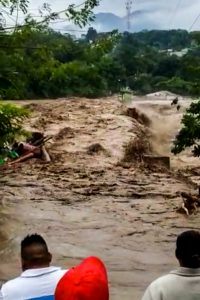
Hurricane Iota and Hurricane Eta have caused destruction, death, homelessness and famine in the countries we serve. Both Honduras and Guatemala have been especially devastated by these storms. The coffee farmers and our National Ministry Leaders fear the worst of the storms have not passed. The coffee farmers fear for their crops and the health and safety of their pickers. Our National Ministry Leaders fear for their communities and congregations.
We received an update from National Ministry Leader in Honduras, Carlos Ramos, who is desperately trying to bring relief and hope to his country:
We are grateful for your prayers.
In the last 36 hours, we have experienced times of anguish, pain and destruction, with the passage of Hurricane Eta.
We are without electricity, drinking water and the internet. All these things were damaged by the rains and landslides.
There are 7 destroyed bridges in our area of Santa Bárbara. The roads were damaged, we are cut off from reaching the rest of the country, and many places are cut off as well.
We have four shelters in the city with 80 families, of at least 6 people per family.
We do not have access to some communities where people are affected.
I have 40 food baskets ready to be delivered and also water filters, but the destroyed roads have delayed the delivery.
In the community of Ilama, Santa Bárbara, 5 families from the church are affected and lost everything, their houses and belongings.
Last night a shelter was visited with food. The shelter is in great need of mattresses, sheets and food.
This is in our area, without taking into account the entire country, especially the northern area and the Atlantic coast where the damage is greater. There are 18 deceased and many missing. Thousands have been rescued but there are people who still remain on the roofs of their homes.
We ask your prayers brothers and sisters.
Carlos R. Ramos
Now more than ever, we thank you for choosing HOPE Coffee.
Because you’ve chosen HOPE Coffee, you are already helping those affected by these disastrous storms. You have partnered with Pastor Carlos to distribute food and clean water to his devastated community. Because these hurricanes have dramatically increased the needs in the countries we serve, we invite you to add-on a small donation to your next coffee order. If you do not currently have any coffee needs but would still like to do more to help the families affected by this destruction, please consider donating directly to our non-profit partner, Create Hope. Together we can provide relief and bring much-needed hope to Mexico, Guatemala and Honduras.
HOPE Partner Tip: Keep your church or organization updated on the latest impact of their coffee by using this free announcement slide for your pre-service announcements or on a screen near your coffee bar! Click the image below to download the announcement slide in our online store.
Santa Barbara, Honduras—In a rural mountain area of Honduras lies two farming villages—Jololo and San Isidro. Most who live here make their living by working in the nearby fields but are currently experiencing a temporary loss of work. The impact on these families has been devastating.
Pastor Carlos, HOPE Coffee’s National Ministry Leader, knew of their hardships and took action to help. Partnering with a pastor from a local church, they began to deliver groceries to families who were uncertain of where their next meal would come from. The team visited 40 families—ensuring that each would have food to put on their tables this week.
As Pastor Carlos shared the gospel with each family, he quickly realized that these families were not only in desperate need of nourishment for their bodies, but for their souls as well. Each time he shared the gospel he received an abundance of questions about the hope Jesus gives. God was moving in the hearts of the two villages.
Among the most eager of listeners were 80-year-old Adito Tinico and his 79-year-old wife Aurelia. Adito and Aurelia long wanted to have a relationship with God, but did not know how. After Pastor Carlos shared the gospel message, the Tinicos knew that Jesus was the Savior they had been searching for their entire lives. Adito’s face lit up as he proclaimed, “I want to be a child of God.” That day both Adito and Aurelia began their new journey of faith.
The team then delivered food to Adito’s son, Esteban Tinico, and his family of six. Because the Tinico family is currently the recipient of a HOPE Coffee house project (more on this story coming soon!), they had already been hearing about the love of Jesus. This time it was different—as Pastor Carlos shared once again about the gift of eternal life, they listened intently. Esteban, his wife and two of his teenagers each decided that they too wanted to follow Jesus!
Each grocery delivery was met with such an incredible response and acceptance of the gospel message. Truly, only God could have orchestrated this. By the end of the day, Pastor Carlos had prayed with 27 villagers who each made the decision to put their trust in Jesus for their salvation.
A few weeks later, Pastor Carlos went back to Jololo and San Isidro to continue discipling the new believers. On this second visit, 10 more people decided to give their lives to Christ!
God used your coffee purchases and the faithful work of Pastor Carlos and his team to bring dozens of precious souls to Himself. We praise Him for using these difficult times to bring many to salvation! Thank you for being a part of what God is doing—praise God with us for our new brothers and sisters in Christ:
Joconal, Guatemala—Alex was in 6th grade and quickly approaching the end of his schooling. At 12 years old, he would soon be looking for work to support himself and his mother. Without a high school diploma, he didn’t have any options—he would surely spend his life farming. This didn’t excite him, but he didn’t have the privilege of dreaming bigger.
You see, in Guatemala the barriers children face to basic education are substantial. Schooling past sixth grade is for those who can afford it. Living in rural villages makes access even more difficult as children might be hours away from the nearest school.
Alex heard about Lan Vwa, a Christian school in the coffee farming village of Joconal. Though Alex lives two hours away from Lan Vwa, he knew he had to take this life-changing opportunity. For the last six years, Alex has travelled back and forth between his own village and Joconal in order to attend grades seven through twelve.
This month, Alex graduated from high school, an enormous achievement for a child from his village. Not only has he received an education, but because of the faithful discipleship of his teachers, Alex dedicated his life to Christ during his time at Lan Vwa. Alex plans on going to college and pursuing a nursing degree.
Thank you for choosing HOPE Coffee for your homes, churches and organizations. You are a part of providing a Christ-centered education for Alex and his schoolmates, giving them bright futures and the opportunity to hear the gospel message!
Because the students of Lan Vwa are learning from home right now, many additional needs have arisen. Would you consider being a part of providing the children of Joconal with additional educational resources during this difficult time? Grab a bag of our Guatemalan coffee, grown by the families of Lan Vwa.
HOPE Partner Tip: Keep your church or organization updated on the latest impact of their coffee by using this free announcement slide for your pre-service announcements or on a screen near your coffee bar! Click the image below to download the announcement slide in our online store.
Freddy in 2012, at the very beginning of his Lan Vwa journey.
Joconal, Guatemala—“What do you want to be when you grow up?” Karina Leiva asked a group of young children in a small farming village. Looks of confusion spread over their faces. Not grasping what she could mean, one child chimed in, “A farmer? I guess?” And another stated, “I’ll probably be a picker like my dad.” “A nurse!” a boy named Freddy said with a laugh. “Why do you laugh?” Karina asked. “Because it could never happen.” was his reply.
Many kids in rural Guatemala don’t have the luxury of dreaming about their futures. Before 2012, the kids of Joconal couldn’t fathom a life in which they picked their own career. In Guatemala, the public school system runs from 1st through 6th grades. Outside of these six years, school is only for those who can afford it. In Joconal, education past 6th grade isn’t an option for many farmers’ children. For the few in Joconal who can afford to pay, it’s often not feasible given the three-hours-a-day walk. Without access to education the children of Joconal have very little control over their futures.
The Leiva family, who owns a coffee farm in Joconal, has seen poverty enduring for generations. They believe that God has called them to break this cycle by connecting their neighbors to the resources they have long lacked.
Believing that education is key to breaking the chains of generational poverty, the Leiva family started a school called Lan Vwa to fill the gaps of education that existed for children in Joconal. They currently provide education that the farming village has never had access to before: preschool, middle school and high school.
Seven years later, Karina asks the same group of children, now teenagers, the same question, “What do you want to be when you grow up?” The question that had once been answered with confusion and blank stares now receives a cacophony of excited responses. “A mechanic!” one boy says. “A teacher!“ one girl says. “A doctor! Or lawyer!” another exclaims. And Freddy, the young boy who laughed at the possibility of having a career, finished high school and graduated from his nursing program earlier this year. Lan Vwa has done more than change their lives—it has given them the chance to dream.
Freddy in 2019 after graduating from his nursing program. He is celebrating with Armando and Norma Leiva, the coffee farmers who helped found Lan Vwa.
We’re proud to announce our partnership with the Leiva family in their efforts to educate and show the love of Christ to the underprivileged in rural Guatemala. Nowwhen you choose HOPE Coffee, not only do you continue to fund life-changing projects in Honduras and Mexico, but you are also a part of educating the children of the farmers who grew your Guatemalan coffee. You’re helping them break the chains of poverty, meet their potential and causing them to hear about the great love that Christ has for them. Because of you, these children that were powerless over their futures are now giving their lives to Jesus, pursuing careers, going to college and returning to serve their families and community. Thank you for choosing HOPE Coffee!
Help us kick off our partnership with Lan Vwa by purchasing the new Lan Vwa Gift Pack, which includes your choice of our new Guatemalan Light or Guatemalan Medium Roast Coffee, along with a $5 direct donation to Lan Vwa in your name.
This gift pack is perfect for teachers, friends, and all of the coffee lovers on your list!
What is the Difference Between Fair Trade and Direct Trade Coffee and Why Does it Matter?
It is no secret that the coffee industry has not been kind to coffee growers. In fact, in Central America many coffee growers do not earn a livable wage. Coffee pickers there often earn less than half of the national minimum wage for their country. Coffee is a $5.18 billion industry in the United States alone, so why do most coffee farmers live in poverty?
Over the past several years, “Fair Trade Coffee” has become an increasingly popular trend. After all, as a consumer it is a great feeling to know that the farmers that grew your coffee are receiving fair compensation for their hard work. Buying fair trade coffee seems to be an easy way to ensure that you are using your spending power to empower and not to exploit. However, now that the concept of “Direct Trade Coffee” is increasing in popularity, new questions have emerged:
Why is the business of coffee so unfair to the coffee grower?
What does Fair Trade Coffee really mean?
How is Direct Trade Coffee different?
What makes HOPE Coffee different?
Why is the business of coffee so unfair to the coffee grower?
Coffee beans ripening into cherries.
The first obvious benefit of the direct trade model is the tremendous cost savings of the fees associated with the third party. By purchasing directly from the farmer, the cut for a coyote, the reselling fees of the processing facility, and the cost associated with fair trade certification can all be added back into the potential profit for the coffee grower. As a result, the farmer can actually make a higher profit without the help of these third party regulators.
The direct trade coffee model also empowers the farmer, who for so long has been powerless in the coffee industry. Suddenly, they are able to communicate directly with the buyer of their coffee, and proudly represent their own product. No longer at the mercy of the coyote, or waiting in anticipation for someone to select their particular grade of coffee from the processing facility, they now have the security of knowing that they will earn a profit from their year of hard work. They will be able to pay their workers. Further, they will not be burdened with crushing loans from their local bank.
Because there is no formal “Direct Trade Coffee” certification process, it can be difficult to determine whether a coffee company is actually participating in a direct trade relationship with its farmers. When choosing a direct trade coffee look for companies that know the names of their farmers and exactly where their coffee comes from. Look for a coffee company that is proud to share photos and information about their farms and farmers with their customers.
What Makes HOPE Coffee Different?
Two boys play at their home near coffee fields in Agua Salada, Honduras, where their fathers work as pickers. In 2018, these boys and their families received bathrooms and clean water filters as a result of HOPE Coffee hearing about the need through farmers and pastors in the area.
HOPE Coffee first began as a ministry of purchasing coffee directly from local coffee farmers and then selling their beans to fund service projects for families in need in their communities. All these years later, we still take our responsibility to the farmer very seriously, and our end goal is still to serve people in need in their countries.
We know these farmers personally and have ongoing relationships with them. By purchasing coffee directly from them at a consistent, above Fair Trade prices, our farmers have the security they need to expand their farms and hire the picking help they need. Additionally, HOPE Coffee pays for a portion of the beans up front. This allows the farmer to have the option to pay his pickers without securing a high-interest loan from a local bank. HOPE Coffee also pays for the in-country processing of the beans, once again relieving the farmer of this added cost. These additional steps are almost unheard of in the coffee industry.
This direct relationship allows HOPE Coffee to be able to share with our customers the source of their morning cup of coffee. They see the faces and read the names of the people who are the first to profit from their purchase. It is through this direct relationship that HOPE Coffee is able to minister to our farmers and their pickers as needs arise. One of our favorite parts of this relationship is when one of the farmers or pickers chooses to trust in Jesus!
HOPE Coffee’s farmers understand the impact that their beans can have in their own communities, because they see it in person. We invest the profits from the sale of their coffee into homes for widows and children in their community, new roofs for families, water storage systems and even clean water filters. All of these projects are facilitated by local churches in these communities, who are able to continue ministering to those in need. Our farmers are proud to be a part of what God is doing through HOPE Coffee!
Even acceptance into the fair trade program may not guarantee that the farmer will receive the full guaranteed price per pound. Because the guaranteed rate is paid to the co-op, the rate may or may not be passed along to the actual coffee grower. In many cases there are no price guarantees whatsoever to the individual grower, nor wage guarantees to workers. Many times the workers will still receive less than local minimum wage standards, even while employed by a fair trade farm. In most fair trade cases, the coffee buyer has no knowledge of the farmers or pickers who grew their coffee, and no ongoing relationship with them.
While Fair Trade USA and FLO have been very successful in turning the world’s attention to the plight of coffee growers, the program has been largely unsuccessful in significantly reducing poverty among coffee growers. To learn more consider reading The Taste of Many Mountains by Bruce Wydick.
What is Direct Trade Coffee?
While the concept of “Fair Trade Coffee” has evolved into an organizational system of regulations, the newer concept of “Direct Trade Coffee” simply describes the relationship between the farmer and the buyer. The third party regulatory committee is removed completely. In a direct trade relationship, the coffee buyer literally has a direct relationship with the coffee farmer. Instead of purchasing coffee beans through the fair trade regulators or a coffee processing facility, coffee companies purchase beans directly from the farmers.
Coffee beans ripening into cherries.
The first obvious benefit of the direct trade model is the tremendous cost savings of the fees associated with the third party. By purchasing directly from the farmer, the cut for a coyote, the reselling fees of the processing facility, and the cost associated with fair trade certification can all be added back into the potential profit for the coffee grower. As a result, the farmer can actually make a higher profit without the help of these third party regulators.
The direct trade coffee model also empowers the farmer, who for so long has been powerless in the coffee industry. Suddenly, they are able to communicate directly with the buyer of their coffee, and proudly represent their own product. No longer at the mercy of the coyote, or waiting in anticipation for someone to select their particular grade of coffee from the processing facility, they now have the security of knowing that they will earn a profit from their year of hard work. They will be able to pay their workers. Further, they will not be burdened with crushing loans from their local bank.
Because there is no formal “Direct Trade Coffee” certification process, it can be difficult to determine whether a coffee company is actually participating in a direct trade relationship with its farmers. When choosing a direct trade coffee look for companies that know the names of their farmers and exactly where their coffee comes from. Look for a coffee company that is proud to share photos and information about their farms and farmers with their customers.
What Makes HOPE Coffee Different?
Two boys play at their home near coffee fields in Agua Salada, Honduras, where their fathers work as pickers. In 2018, these boys and their families received bathrooms and clean water filters as a result of HOPE Coffee hearing about the need through farmers and pastors in the area.
HOPE Coffee first began as a ministry of purchasing coffee directly from local coffee farmers and then selling their beans to fund service projects for families in need in their communities. All these years later, we still take our responsibility to the farmer very seriously, and our end goal is still to serve people in need in their countries.
We know these farmers personally and have ongoing relationships with them. By purchasing coffee directly from them at a consistent, above Fair Trade prices, our farmers have the security they need to expand their farms and hire the picking help they need. Additionally, HOPE Coffee pays for a portion of the beans up front. This allows the farmer to have the option to pay his pickers without securing a high-interest loan from a local bank. HOPE Coffee also pays for the in-country processing of the beans, once again relieving the farmer of this added cost. These additional steps are almost unheard of in the coffee industry.
This direct relationship allows HOPE Coffee to be able to share with our customers the source of their morning cup of coffee. They see the faces and read the names of the people who are the first to profit from their purchase. It is through this direct relationship that HOPE Coffee is able to minister to our farmers and their pickers as needs arise. One of our favorite parts of this relationship is when one of the farmers or pickers chooses to trust in Jesus!
HOPE Coffee’s farmers understand the impact that their beans can have in their own communities, because they see it in person. We invest the profits from the sale of their coffee into homes for widows and children in their community, new roofs for families, water storage systems and even clean water filters. All of these projects are facilitated by local churches in these communities, who are able to continue ministering to those in need. Our farmers are proud to be a part of what God is doing through HOPE Coffee!
The concept itself is undoubtedly admirable. Not only will the coffee farmers receive a fair price per bean, but their local communities will also see improvements. However, there are numerous obstacles the grower must navigate in order to be eligible for a fair trade program. For example, FLO limits participation in the program to only very small farms. Furthermore, those farms cannot operate independently as FLO requires farms to be part of an established co-op with other small coffee farms. The result is a host of coffee farmers who will never be considered for a fair trade coffee program, regardless of their other qualifications. This includes independently operated farms, and those who have inherited a larger farm. The requirement could actually even discourage a farmer from successfully expanding his farm!
FLO also requires a substantial fee upon acceptance into the program—a fee most coffee farmers cannot afford. On top of this, in order to keep these fair trade coffee prices high, FLO limits the number of participating farms. This means that even if a coffee grower meets all of the conditions and can pay the entry fee, they are still unlikely to be able to sell their beans as part of a fair trade program.
Home of a coffee picker in Agua Salada, Honduras
Even acceptance into the fair trade program may not guarantee that the farmer will receive the full guaranteed price per pound. Because the guaranteed rate is paid to the co-op, the rate may or may not be passed along to the actual coffee grower. In many cases there are no price guarantees whatsoever to the individual grower, nor wage guarantees to workers. Many times the workers will still receive less than local minimum wage standards, even while employed by a fair trade farm. In most fair trade cases, the coffee buyer has no knowledge of the farmers or pickers who grew their coffee, and no ongoing relationship with them.
While Fair Trade USA and FLO have been very successful in turning the world’s attention to the plight of coffee growers, the program has been largely unsuccessful in significantly reducing poverty among coffee growers. To learn more consider reading The Taste of Many Mountains by Bruce Wydick.
What is Direct Trade Coffee?
While the concept of “Fair Trade Coffee” has evolved into an organizational system of regulations, the newer concept of “Direct Trade Coffee” simply describes the relationship between the farmer and the buyer. The third party regulatory committee is removed completely. In a direct trade relationship, the coffee buyer literally has a direct relationship with the coffee farmer. Instead of purchasing coffee beans through the fair trade regulators or a coffee processing facility, coffee companies purchase beans directly from the farmers.
Coffee beans ripening into cherries.
The first obvious benefit of the direct trade model is the tremendous cost savings of the fees associated with the third party. By purchasing directly from the farmer, the cut for a coyote, the reselling fees of the processing facility, and the cost associated with fair trade certification can all be added back into the potential profit for the coffee grower. As a result, the farmer can actually make a higher profit without the help of these third party regulators.
The direct trade coffee model also empowers the farmer, who for so long has been powerless in the coffee industry. Suddenly, they are able to communicate directly with the buyer of their coffee, and proudly represent their own product. No longer at the mercy of the coyote, or waiting in anticipation for someone to select their particular grade of coffee from the processing facility, they now have the security of knowing that they will earn a profit from their year of hard work. They will be able to pay their workers. Further, they will not be burdened with crushing loans from their local bank.
Because there is no formal “Direct Trade Coffee” certification process, it can be difficult to determine whether a coffee company is actually participating in a direct trade relationship with its farmers. When choosing a direct trade coffee look for companies that know the names of their farmers and exactly where their coffee comes from. Look for a coffee company that is proud to share photos and information about their farms and farmers with their customers.
What Makes HOPE Coffee Different?
Two boys play at their home near coffee fields in Agua Salada, Honduras, where their fathers work as pickers. In 2018, these boys and their families received bathrooms and clean water filters as a result of HOPE Coffee hearing about the need through farmers and pastors in the area.
HOPE Coffee first began as a ministry of purchasing coffee directly from local coffee farmers and then selling their beans to fund service projects for families in need in their communities. All these years later, we still take our responsibility to the farmer very seriously, and our end goal is still to serve people in need in their countries.
We know these farmers personally and have ongoing relationships with them. By purchasing coffee directly from them at a consistent, above Fair Trade prices, our farmers have the security they need to expand their farms and hire the picking help they need. Additionally, HOPE Coffee pays for a portion of the beans up front. This allows the farmer to have the option to pay his pickers without securing a high-interest loan from a local bank. HOPE Coffee also pays for the in-country processing of the beans, once again relieving the farmer of this added cost. These additional steps are almost unheard of in the coffee industry.
This direct relationship allows HOPE Coffee to be able to share with our customers the source of their morning cup of coffee. They see the faces and read the names of the people who are the first to profit from their purchase. It is through this direct relationship that HOPE Coffee is able to minister to our farmers and their pickers as needs arise. One of our favorite parts of this relationship is when one of the farmers or pickers chooses to trust in Jesus!
HOPE Coffee’s farmers understand the impact that their beans can have in their own communities, because they see it in person. We invest the profits from the sale of their coffee into homes for widows and children in their community, new roofs for families, water storage systems and even clean water filters. All of these projects are facilitated by local churches in these communities, who are able to continue ministering to those in need. Our farmers are proud to be a part of what God is doing through HOPE Coffee!
Direct Trade Coffee beans processed, bagged and ready to be exported from Honduras to the U.S.
Once the beans arrive at the processing facility, they are weighed, depulped, dried, sorted, cupped (tasted), rated according to quality, processed and packaged for export.
This entire process is often a gamble. There are many factors including weather, disease, bean quality, processing costs, current market rates for coffee, interest rates and time spent waiting that can easily wipe out any and all potential profit, no matter which of the above options the farmer chooses.
What is Fair Trade Coffee?
The concept of Fair Trade Coffee is perhaps the most widely-recognized response to this harsh reality. Fair Trade USA, who is overseen by FLO (Fairtrade Labelling Organizations International), dictates Fair Trade Coffee standards in the United States. The goal is to enable coffee growers to earn a guaranteed price per pound from their buyers. Further, the buyer pays an additional $.10 per pound to fund community and business development projects. These projects are intended to improve education, sanitation and even healthcare in these impoverished nations.
The concept itself is undoubtedly admirable. Not only will the coffee farmers receive a fair price per bean, but their local communities will also see improvements. However, there are numerous obstacles the grower must navigate in order to be eligible for a fair trade program. For example, FLO limits participation in the program to only very small farms. Furthermore, those farms cannot operate independently as FLO requires farms to be part of an established co-op with other small coffee farms. The result is a host of coffee farmers who will never be considered for a fair trade coffee program, regardless of their other qualifications. This includes independently operated farms, and those who have inherited a larger farm. The requirement could actually even discourage a farmer from successfully expanding his farm!
FLO also requires a substantial fee upon acceptance into the program—a fee most coffee farmers cannot afford. On top of this, in order to keep these fair trade coffee prices high, FLO limits the number of participating farms. This means that even if a coffee grower meets all of the conditions and can pay the entry fee, they are still unlikely to be able to sell their beans as part of a fair trade program.
Home of a coffee picker in Agua Salada, Honduras
Even acceptance into the fair trade program may not guarantee that the farmer will receive the full guaranteed price per pound. Because the guaranteed rate is paid to the co-op, the rate may or may not be passed along to the actual coffee grower. In many cases there are no price guarantees whatsoever to the individual grower, nor wage guarantees to workers. Many times the workers will still receive less than local minimum wage standards, even while employed by a fair trade farm. In most fair trade cases, the coffee buyer has no knowledge of the farmers or pickers who grew their coffee, and no ongoing relationship with them.
While Fair Trade USA and FLO have been very successful in turning the world’s attention to the plight of coffee growers, the program has been largely unsuccessful in significantly reducing poverty among coffee growers. To learn more consider reading The Taste of Many Mountains by Bruce Wydick.
What is Direct Trade Coffee?
While the concept of “Fair Trade Coffee” has evolved into an organizational system of regulations, the newer concept of “Direct Trade Coffee” simply describes the relationship between the farmer and the buyer. The third party regulatory committee is removed completely. In a direct trade relationship, the coffee buyer literally has a direct relationship with the coffee farmer. Instead of purchasing coffee beans through the fair trade regulators or a coffee processing facility, coffee companies purchase beans directly from the farmers.
Coffee beans ripening into cherries.
The first obvious benefit of the direct trade model is the tremendous cost savings of the fees associated with the third party. By purchasing directly from the farmer, the cut for a coyote, the reselling fees of the processing facility, and the cost associated with fair trade certification can all be added back into the potential profit for the coffee grower. As a result, the farmer can actually make a higher profit without the help of these third party regulators.
The direct trade coffee model also empowers the farmer, who for so long has been powerless in the coffee industry. Suddenly, they are able to communicate directly with the buyer of their coffee, and proudly represent their own product. No longer at the mercy of the coyote, or waiting in anticipation for someone to select their particular grade of coffee from the processing facility, they now have the security of knowing that they will earn a profit from their year of hard work. They will be able to pay their workers. Further, they will not be burdened with crushing loans from their local bank.
Because there is no formal “Direct Trade Coffee” certification process, it can be difficult to determine whether a coffee company is actually participating in a direct trade relationship with its farmers. When choosing a direct trade coffee look for companies that know the names of their farmers and exactly where their coffee comes from. Look for a coffee company that is proud to share photos and information about their farms and farmers with their customers.
What Makes HOPE Coffee Different?
Two boys play at their home near coffee fields in Agua Salada, Honduras, where their fathers work as pickers. In 2018, these boys and their families received bathrooms and clean water filters as a result of HOPE Coffee hearing about the need through farmers and pastors in the area.
HOPE Coffee first began as a ministry of purchasing coffee directly from local coffee farmers and then selling their beans to fund service projects for families in need in their communities. All these years later, we still take our responsibility to the farmer very seriously, and our end goal is still to serve people in need in their countries.
We know these farmers personally and have ongoing relationships with them. By purchasing coffee directly from them at a consistent, above Fair Trade prices, our farmers have the security they need to expand their farms and hire the picking help they need. Additionally, HOPE Coffee pays for a portion of the beans up front. This allows the farmer to have the option to pay his pickers without securing a high-interest loan from a local bank. HOPE Coffee also pays for the in-country processing of the beans, once again relieving the farmer of this added cost. These additional steps are almost unheard of in the coffee industry.
This direct relationship allows HOPE Coffee to be able to share with our customers the source of their morning cup of coffee. They see the faces and read the names of the people who are the first to profit from their purchase. It is through this direct relationship that HOPE Coffee is able to minister to our farmers and their pickers as needs arise. One of our favorite parts of this relationship is when one of the farmers or pickers chooses to trust in Jesus!
HOPE Coffee’s farmers understand the impact that their beans can have in their own communities, because they see it in person. We invest the profits from the sale of their coffee into homes for widows and children in their community, new roofs for families, water storage systems and even clean water filters. All of these projects are facilitated by local churches in these communities, who are able to continue ministering to those in need. Our farmers are proud to be a part of what God is doing through HOPE Coffee!
Direct Trade Coffee Farm in Siguatepeque, Honduras.
Even while living in a land rich with resources, most coffee farmers and pickers live in poverty. Every year at harvest time the coffee farmer will hire pickers to come gather the coffee cherries from the trees. The farmer must pay the pickers before he discovers what he will earn from the year’s crop, and long before he actually receives the payment for his beans. Unfortunately, most farmers do not have the ability to pay these wages from their own savings. Often, this means taking loans from local banks with extremely unfavorable interest rates.
After the picking is complete, the beans are ready to be transported to the processing facility. At this point, farmers have at least three choices when selling their coffee beans:
They can sell them to groups commonly referred to as “coyotes.” These are local middlemen who pay the farmer a fraction of the local value of the beans, pick up the beans at the farm, transport them to the processing facility, and sell the beans on the local market.This option provides the farmer with immediate money for his coffee, but the farmer will receive much less than the full international market price he would receive if he were to transport the beans himself.
Rodimiro (left) and Nelson (right): Two of the Direct Trade Coffee farmers who grow the Honduran line of HOPE Coffee.
Sometimes the farmer is able to get a partial or full payment of the international market price upfront. However, they are still responsible for the costs to process the coffee, and at times additional fees to the co-op, as well.
They can deliver their beans in person to a local processing facility and wait for an international buyer. Most coffee buyers in the United States contact coffee processing facilities when they have need for coffee. They describe the type, quality and quantity of coffee they would like. Eventually, the facility will match the buyer to a farmer’s particular quality of coffee.
While the farmer will receive the international market price (which is typically lower than the established “Fair Trade” price) they must wait to receive payment for the coffee beans until the buyer actually pays for the coffee. This can take weeks or even months. Because the farmer is responsible for the cost of the coffee processing long before they will receive payment, this may mean additional loans. In some cases, the cost of processing could be deducted from the farmers future payment once the coffee is sold.
Direct Trade Coffee beans processed, bagged and ready to be exported from Honduras to the U.S.
Once the beans arrive at the processing facility, they are weighed, depulped, dried, sorted, cupped (tasted), rated according to quality, processed and packaged for export.
This entire process is often a gamble. There are many factors including weather, disease, bean quality, processing costs, current market rates for coffee, interest rates and time spent waiting that can easily wipe out any and all potential profit, no matter which of the above options the farmer chooses.
What is Fair Trade Coffee?
The concept of Fair Trade Coffee is perhaps the most widely-recognized response to this harsh reality. Fair Trade USA, who is overseen by FLO (Fairtrade Labelling Organizations International), dictates Fair Trade Coffee standards in the United States. The goal is to enable coffee growers to earn a guaranteed price per pound from their buyers. Further, the buyer pays an additional $.10 per pound to fund community and business development projects. These projects are intended to improve education, sanitation and even healthcare in these impoverished nations.
The concept itself is undoubtedly admirable. Not only will the coffee farmers receive a fair price per bean, but their local communities will also see improvements. However, there are numerous obstacles the grower must navigate in order to be eligible for a fair trade program. For example, FLO limits participation in the program to only very small farms. Furthermore, those farms cannot operate independently as FLO requires farms to be part of an established co-op with other small coffee farms. The result is a host of coffee farmers who will never be considered for a fair trade coffee program, regardless of their other qualifications. This includes independently operated farms, and those who have inherited a larger farm. The requirement could actually even discourage a farmer from successfully expanding his farm!
FLO also requires a substantial fee upon acceptance into the program—a fee most coffee farmers cannot afford. On top of this, in order to keep these fair trade coffee prices high, FLO limits the number of participating farms. This means that even if a coffee grower meets all of the conditions and can pay the entry fee, they are still unlikely to be able to sell their beans as part of a fair trade program.
Home of a coffee picker in Agua Salada, Honduras
Even acceptance into the fair trade program may not guarantee that the farmer will receive the full guaranteed price per pound. Because the guaranteed rate is paid to the co-op, the rate may or may not be passed along to the actual coffee grower. In many cases there are no price guarantees whatsoever to the individual grower, nor wage guarantees to workers. Many times the workers will still receive less than local minimum wage standards, even while employed by a fair trade farm. In most fair trade cases, the coffee buyer has no knowledge of the farmers or pickers who grew their coffee, and no ongoing relationship with them.
While Fair Trade USA and FLO have been very successful in turning the world’s attention to the plight of coffee growers, the program has been largely unsuccessful in significantly reducing poverty among coffee growers. To learn more consider reading The Taste of Many Mountains by Bruce Wydick.
What is Direct Trade Coffee?
While the concept of “Fair Trade Coffee” has evolved into an organizational system of regulations, the newer concept of “Direct Trade Coffee” simply describes the relationship between the farmer and the buyer. The third party regulatory committee is removed completely. In a direct trade relationship, the coffee buyer literally has a direct relationship with the coffee farmer. Instead of purchasing coffee beans through the fair trade regulators or a coffee processing facility, coffee companies purchase beans directly from the farmers.
Coffee beans ripening into cherries.
The first obvious benefit of the direct trade model is the tremendous cost savings of the fees associated with the third party. By purchasing directly from the farmer, the cut for a coyote, the reselling fees of the processing facility, and the cost associated with fair trade certification can all be added back into the potential profit for the coffee grower. As a result, the farmer can actually make a higher profit without the help of these third party regulators.
The direct trade coffee model also empowers the farmer, who for so long has been powerless in the coffee industry. Suddenly, they are able to communicate directly with the buyer of their coffee, and proudly represent their own product. No longer at the mercy of the coyote, or waiting in anticipation for someone to select their particular grade of coffee from the processing facility, they now have the security of knowing that they will earn a profit from their year of hard work. They will be able to pay their workers. Further, they will not be burdened with crushing loans from their local bank.
Because there is no formal “Direct Trade Coffee” certification process, it can be difficult to determine whether a coffee company is actually participating in a direct trade relationship with its farmers. When choosing a direct trade coffee look for companies that know the names of their farmers and exactly where their coffee comes from. Look for a coffee company that is proud to share photos and information about their farms and farmers with their customers.
What Makes HOPE Coffee Different?
Two boys play at their home near coffee fields in Agua Salada, Honduras, where their fathers work as pickers. In 2018, these boys and their families received bathrooms and clean water filters as a result of HOPE Coffee hearing about the need through farmers and pastors in the area.
HOPE Coffee first began as a ministry of purchasing coffee directly from local coffee farmers and then selling their beans to fund service projects for families in need in their communities. All these years later, we still take our responsibility to the farmer very seriously, and our end goal is still to serve people in need in their countries.
We know these farmers personally and have ongoing relationships with them. By purchasing coffee directly from them at a consistent, above Fair Trade prices, our farmers have the security they need to expand their farms and hire the picking help they need. Additionally, HOPE Coffee pays for a portion of the beans up front. This allows the farmer to have the option to pay his pickers without securing a high-interest loan from a local bank. HOPE Coffee also pays for the in-country processing of the beans, once again relieving the farmer of this added cost. These additional steps are almost unheard of in the coffee industry.
This direct relationship allows HOPE Coffee to be able to share with our customers the source of their morning cup of coffee. They see the faces and read the names of the people who are the first to profit from their purchase. It is through this direct relationship that HOPE Coffee is able to minister to our farmers and their pickers as needs arise. One of our favorite parts of this relationship is when one of the farmers or pickers chooses to trust in Jesus!
HOPE Coffee’s farmers understand the impact that their beans can have in their own communities, because they see it in person. We invest the profits from the sale of their coffee into homes for widows and children in their community, new roofs for families, water storage systems and even clean water filters. All of these projects are facilitated by local churches in these communities, who are able to continue ministering to those in need. Our farmers are proud to be a part of what God is doing through HOPE Coffee!
San Miguel Colinas, Honduras—Argentina has spent the last 35 years ministering beside her husband, Pastor Regino. Though well into his seventies, Regino began the journey of pastoring a small church last year. Argentina and Regino hoped for many more years doing what they’ve always done—serving the Lord together.
As a part of his new ministry, in the early mornings Pastor Regino shared the gospel with field laborers before they started their day’s work. One morning, on his way home from evangelizing in the fields Regino was in a fatal car accident, leaving Argentina widowed.
Pastor Regino’s humble income had always been enough to put food on the table, but now Argentina often doesn’t know where her next meal will come from.
Many of the families in Argentina’s village also face daily hunger. Pastor Franklin from a nearby church knew of their challenges. He partnered with HOPE Coffee to provide food and hygiene supplies for Argentina and 23 families in San Miguel Colinas.
Pastor Franklin spent three days delivering groceries and ministering in Argentina’s village. Relief and gratitude filled the faces of each family he visited. The groceries were so well received that even the unbelieving families were open to hearing about the love of Jesus!
With your next sip of HOPE Coffee, think of Argentina. Pray for the new widow, that the Lord would continue to provide for her every need. And pray for her community, that through Pastor Franklin’s faithful ministry, many would come to know Christ.
Because you choose HOPE Coffee, you are a part of feeding the hungry in Argentina’s village. Thank you for continuing to choose HOPE Coffee for your homes, churches and organizations.
HOPE Coffee partners with local churches who want to meet needs in their communities for the sake of the gospel. These families in need not only hear the good news about Jesus, but have a relationship with a local church that lasts long after the project is complete!
HOPE Partner Tip: Keep your church or organization updated on the latest impact of their coffee by using this free announcement slide for your pre-service announcements or on a screen near your coffee bar! Click the image below to download the announcement slide in our online store.
Patrocinio, Mexico—Juanita Andrés suffered years of abuse up until her husband left her to raise her five children alone. She works hard in the corn fields in order to provide. After her long work days, Juanita would have to walk 3 hours each day to retrieve clean water for her family. Though there is a creek that runs through her village, it is contaminated and unsafe for drinking, bathing and cooking.
Two years ago, HOPE Coffee partnered with a local church to provide the Andrés family and 34 of their neighbors with clean water systems. Juanita’s life was changed in a profound way. These water filters allow the villagers to use the water from the creek that runs through their village for their daily needs. They no longer have to make a choice between risking illness with the contaminated creek water or walking miles for clean water.
Clean water was not the most life-changing gift that Juanita received that day. Though Juanita did not decide to follow Jesus at that time, the seed of the gospel was planted in her heart. That seed was faithfully watered by Pastor Sergio and his church who—even when there was no evident fruit—continued to build relationships in the village.
God gave growth to the seeds planted that day. Juanita and two of her teenage daughters just decided to follow Jesus! Along with the Andrés family, three more villagers also made decisions to follow Jesus. All six villagers were baptized by Pastor Sergio.
Thank you for choosing HOPE Coffee for your homes, churches and organizations. Because of you, the hope found in Jesus has reached our new brothers and sisters in Mexico: Juanita, Aury, Ricardo, Gustavo, Jesusa and Wilfrido.
HOPE Coffee partners with local churches who want to meet needs in their communities for the sake of the gospel. These families in need not only hear the good news about Jesus, but have a relationship with a local church that lasts long after the project is complete!
HOPE Partner Tip: Keep your church or organization updated on the latest impact of their coffee by using this free announcement slide for your pre-service announcements or on a screen near your coffee bar! Click the image below to download the announcement slide in our online store.




 You see, in Guatemala the barriers children face to basic education are substantial. Schooling past sixth grade is for those who can afford it. Living in rural villages makes access even more difficult as children might be hours away from the nearest school.


 God gave growth to the seeds planted that day.